Overview
Wyrwood gives Linux containers stable, deliberately limited access to keys held by a host SSH agent. One unprivileged daemon connects to the user’s agent and publishes a separate SSH-agent-compatible socket for each consumer.
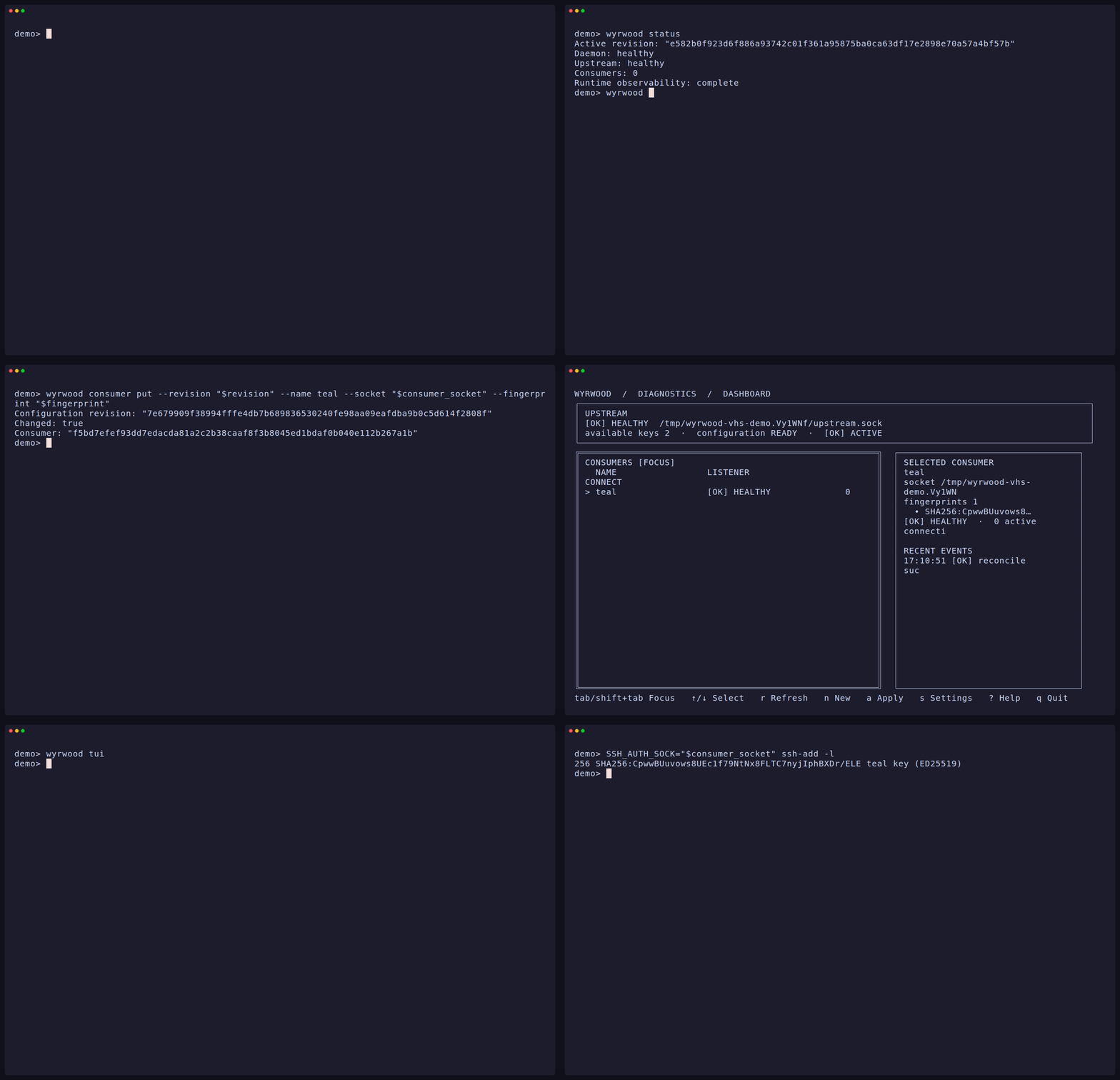
Each consumer socket is an authorization boundary. Its allowlist names exact SHA-256 public-key fingerprints, so mounting one socket never grants access to new keys merely because they appear in the host agent. Identity listing and signing are filtered at request time; agent administration and unknown extensions are rejected.
Wyrwood addresses two problems with mounting a host agent socket directly:
- Excess authority — different containers can receive different key allowlists instead of sharing every identity in the host agent.
- Stale mounts — containers mount the consumer’s parent directory, so a replaced socket remains visible without restarting or remounting the container.
Private keys never enter Wyrwood. Signing stays inside the configured upstream agent, including any confirmation or destination restrictions it enforces. Wyrwood retains only bounded, categorical operational events; it does not store payloads, signatures, public-key bytes, agent comments, destinations, paths, or raw protocol messages.
The current release supports Linux hosts, Unix-domain consumer sockets, and a systemd user service. The command-line interface (CLI) and terminal user interface (TUI) use the same owner-authenticated local daemon control socket.